Technology

A printer that moves like a crew.

We build with ProBuild3D large-format construction printers, made by our sister company in Palm City. No hype: here is the process, the machines, and the material, the way we would explain them to your project team.

From file to walls

Five steps. No mystery box.

01DesignModeled in the CAD tools teams already use, then sliced to a print path. Open formats, standard G-code, no lock-in.
02Set upThe printer arrives on a trailer, rail lays along the wall line, and the arm is print-ready in about an hour.
03MixThe mixing pump keeps the water and dry-mix ratio constant, the variable that decides whether layers bond.
04PrintWalls rise layer by layer, on site or in a warehouse, while an operator supervises from any device on Wi-Fi.
05FinishLicensed trades take over: roof, electrical, plumbing, windows, finishes. Then inspection and keys.

On the job site

It behaves like equipment, not infrastructure.

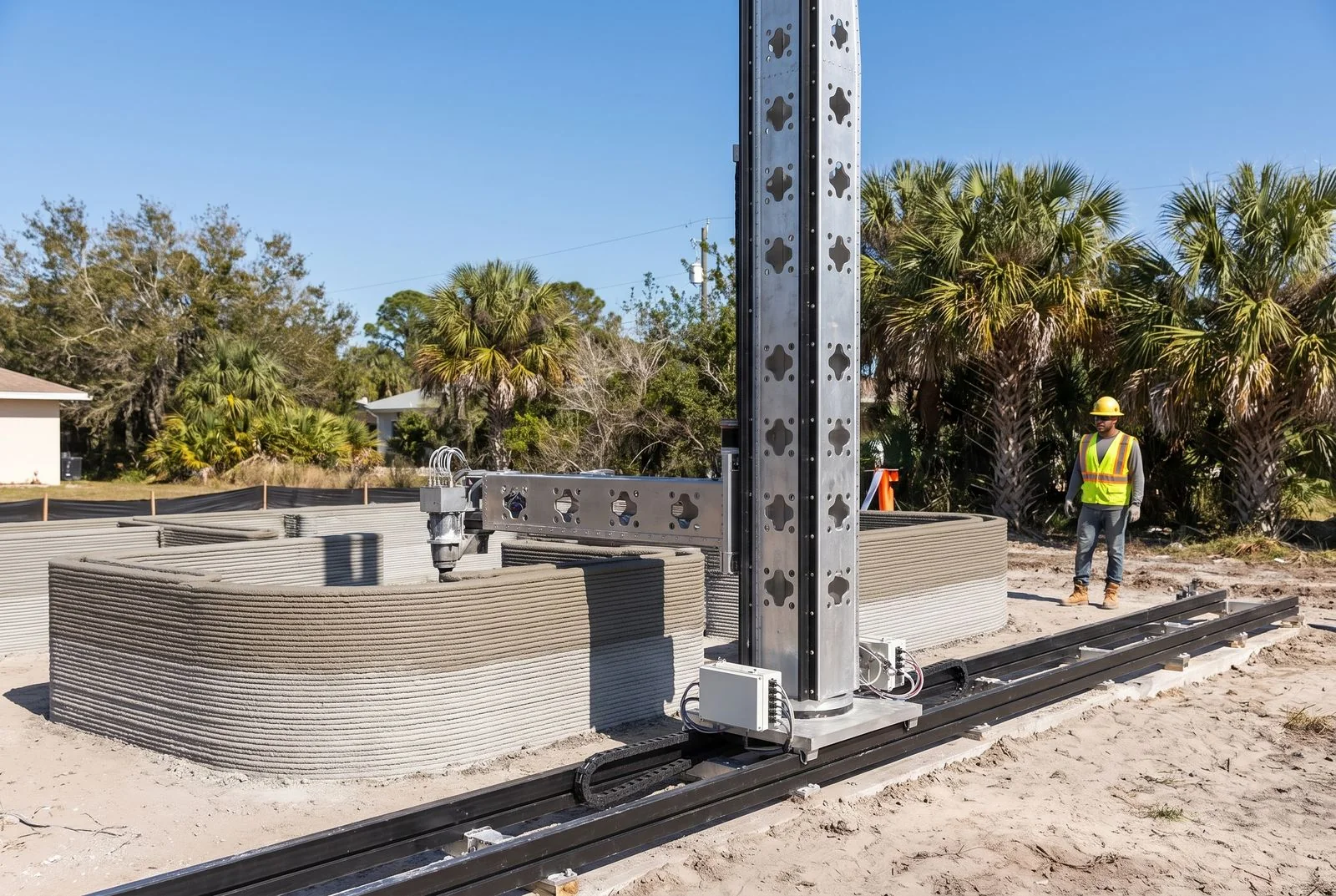
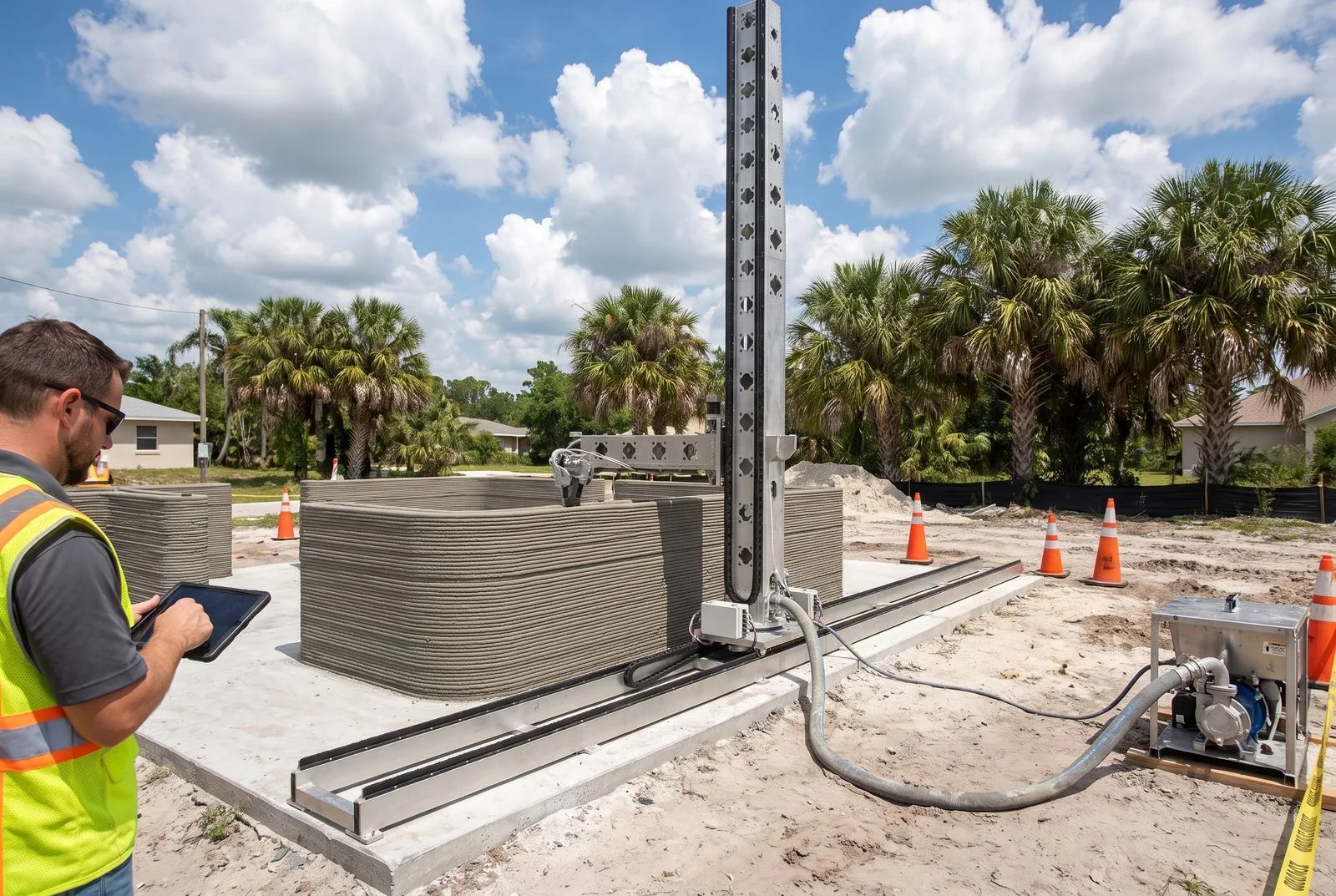
No crane, no wide loads, no three-phase fleet. The printer tows in on a trailer and works beside the wall instead of surrounding the building, so your other trades keep working while it prints. Indoors or out, weather stops being a schedule variable.

One operator supervises from a browser on any device on site. Print speed adjusts in real time, and the site stays open.

Track construction 3D printer working on an active Florida job site

The machines we run

Two printers. One standard.

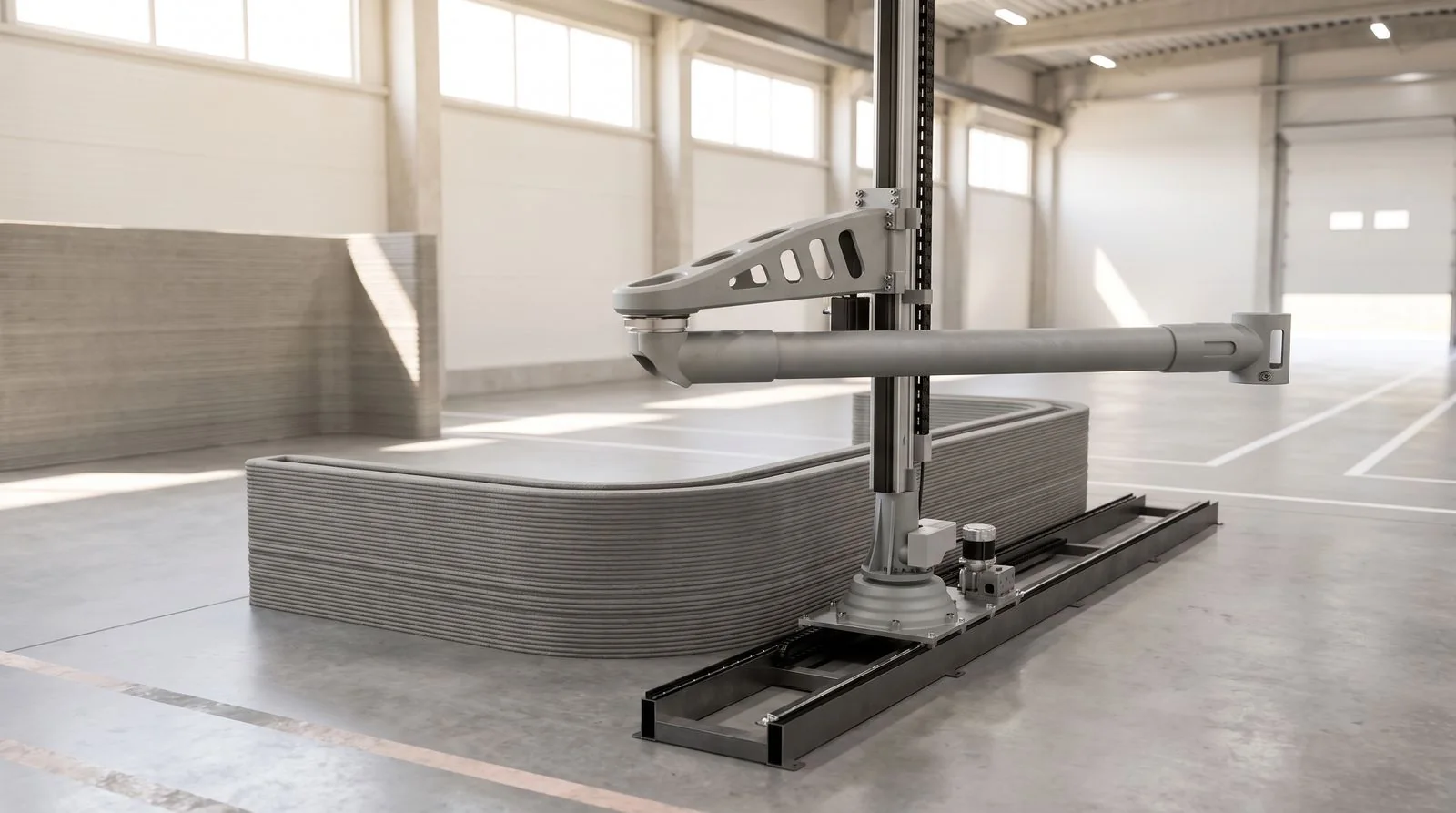
PB Elite Roadrunner SCARA printer extruding a printed wall segment in a prefab bay

PB Elite Roadrunner

A SCARA-arm printer that transports without a crane and sets up in hours. The printer itself draws 10A at 110V, a regular outlet, and works from its mast and track so the site stays open.

SCARA armTows on a trailer110 V outletOn site or prefab
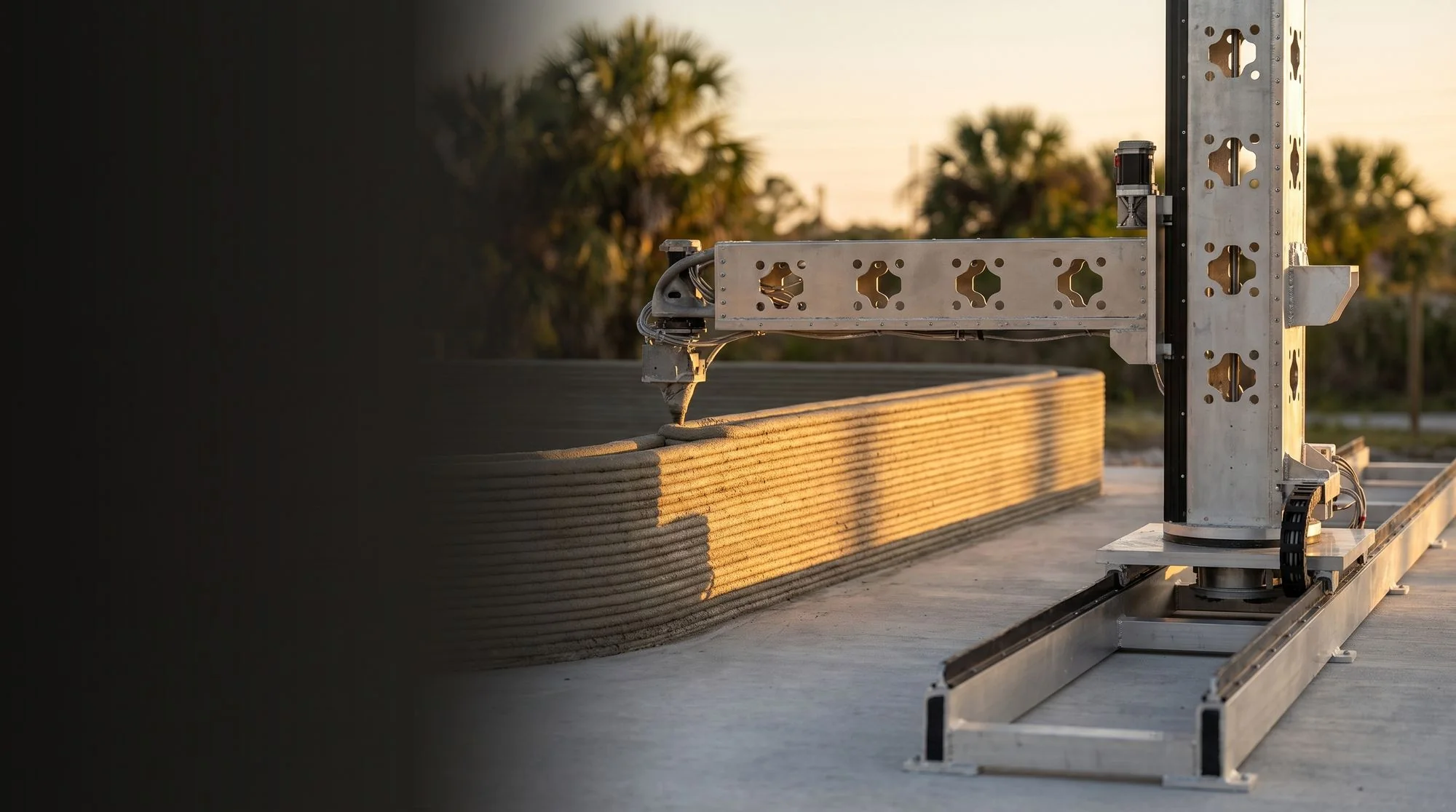
PB Heavy Duty track printer printing curved concrete walls on site

PB Heavy Duty

The track platform for bigger runs. The print envelope extends by adding rail sections, not by engineering a bigger frame, so full walls, larger homes, and multi-unit work stay in reach.

Track platformExtendable railRepositions without a craneMulti-unit ready

Built and supported by ProBuild3D in Palm City, Florida.

The numbers

Performance, on the record.

±0.1 mmPrint precisionLayers land where the drawings say.
~1 hourArrival to set and dry-run readyNo idle days before the first layer.
48 hoursA 1,500 SF shell, printedShell weeks compress into days.
110 V / 10 APrinter power. A regular outletThe printer runs off a wall outlet.

ProBuild3D technology performance figures. Hover each number for why it matters.

The hybrid build

Print the shell. Finish it right.

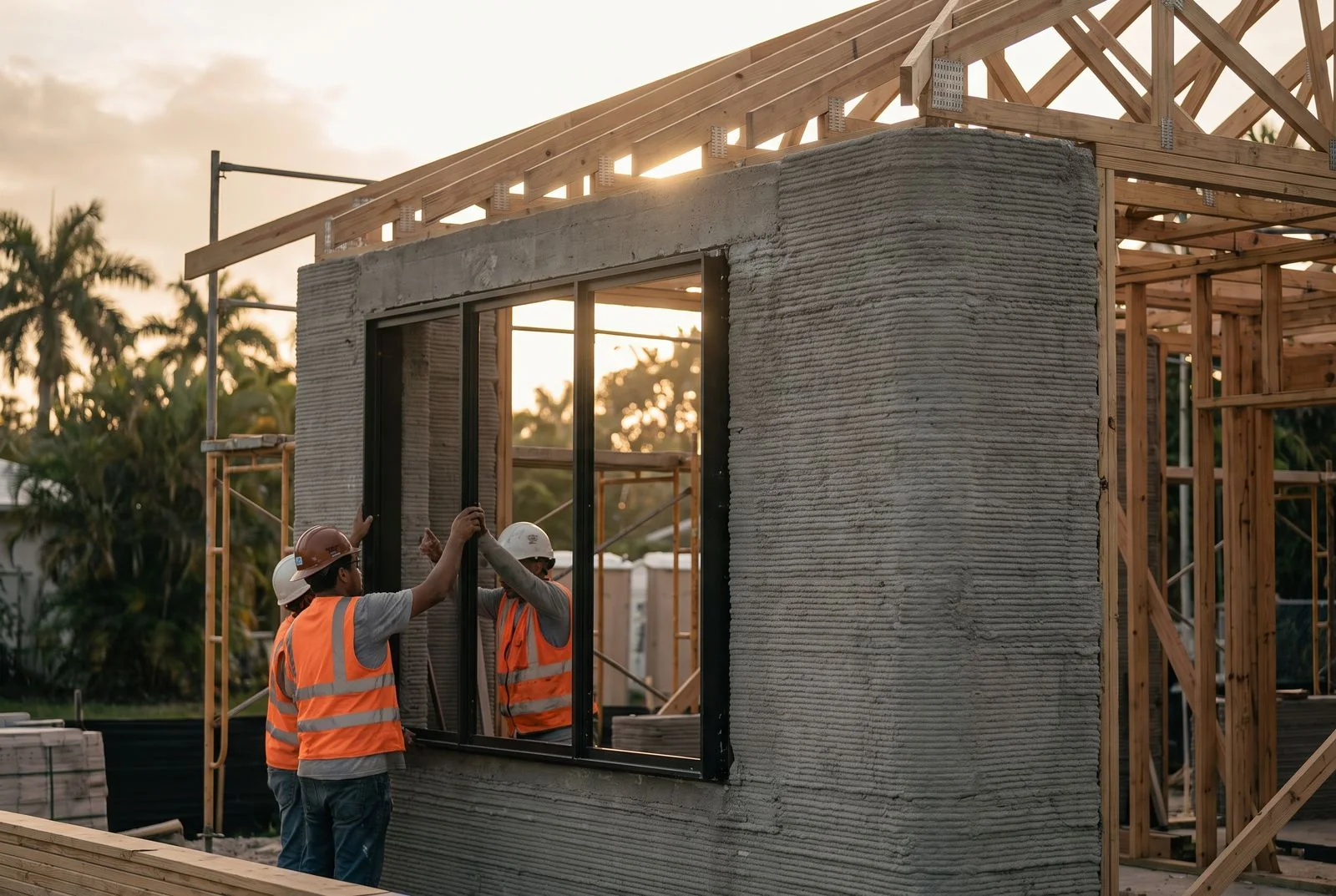
The printer lays the concrete walls, with vertical wiring channels printed in. Licensed trades do the rest: roof, electrical, plumbing, windows, finishes. Then permit, inspection, and certificate of occupancy. 3D printing where it wins, traditional craft where it belongs.

Trades finishing a printed concrete home
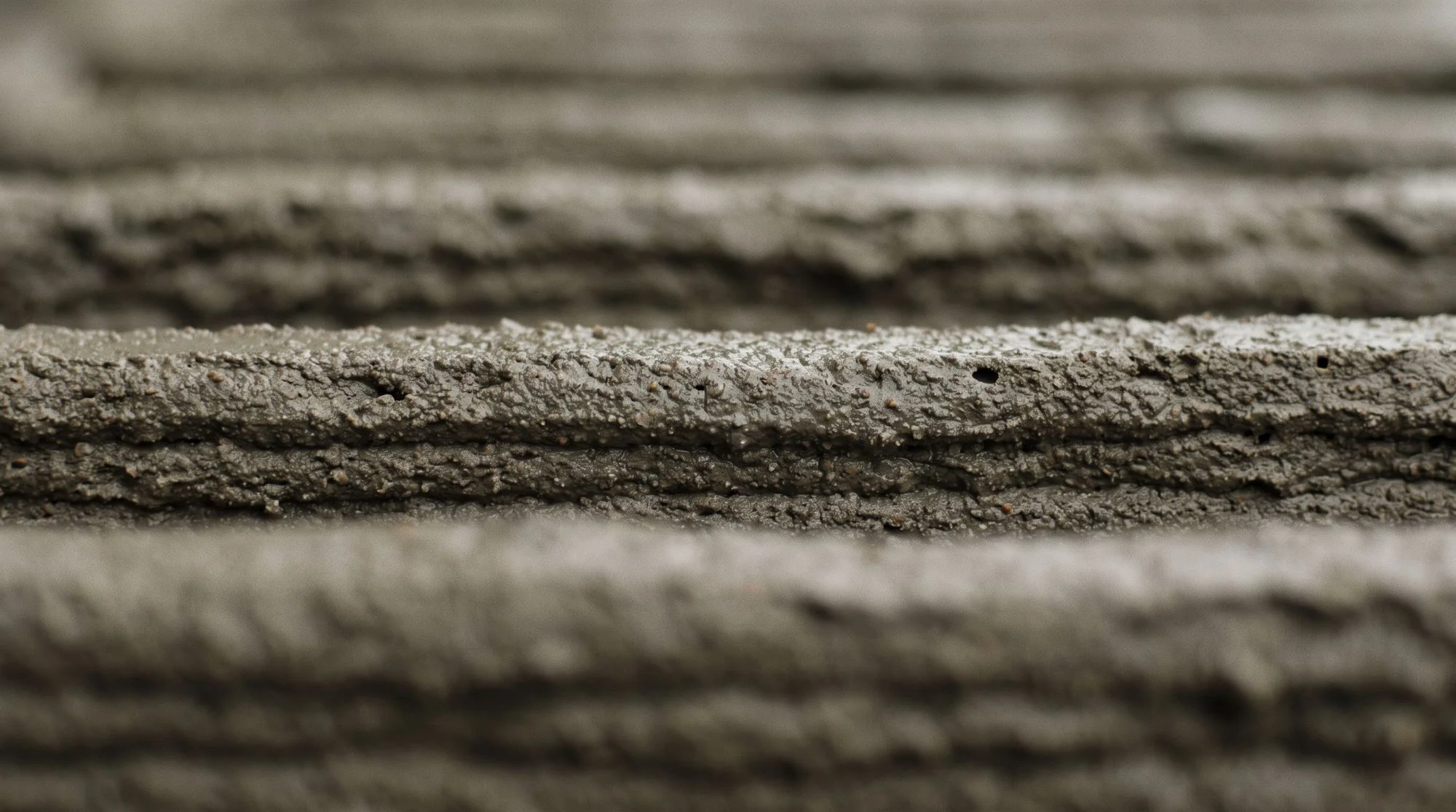
Macro of printed concrete layers

Mix and material

Engineered to be printed.

Engineered printable cementitious and geopolymer blends, mixed on site from locally available components. The mixing system meters water automatically so every layer bonds to the last.

Printed concrete tests up to six times the strength of conventional block construction, and permitted, inspected Florida homes, hurricane-rated construction included, stand on this material system today.

ProBuild3D material system figures.

Want the engineering depth?

The full teardown lives with the machine builder.

Component-by-component breakdowns, SCARA versus gantry, control software, and materials science, published by ProBuild3D, the sister company that builds our printers.